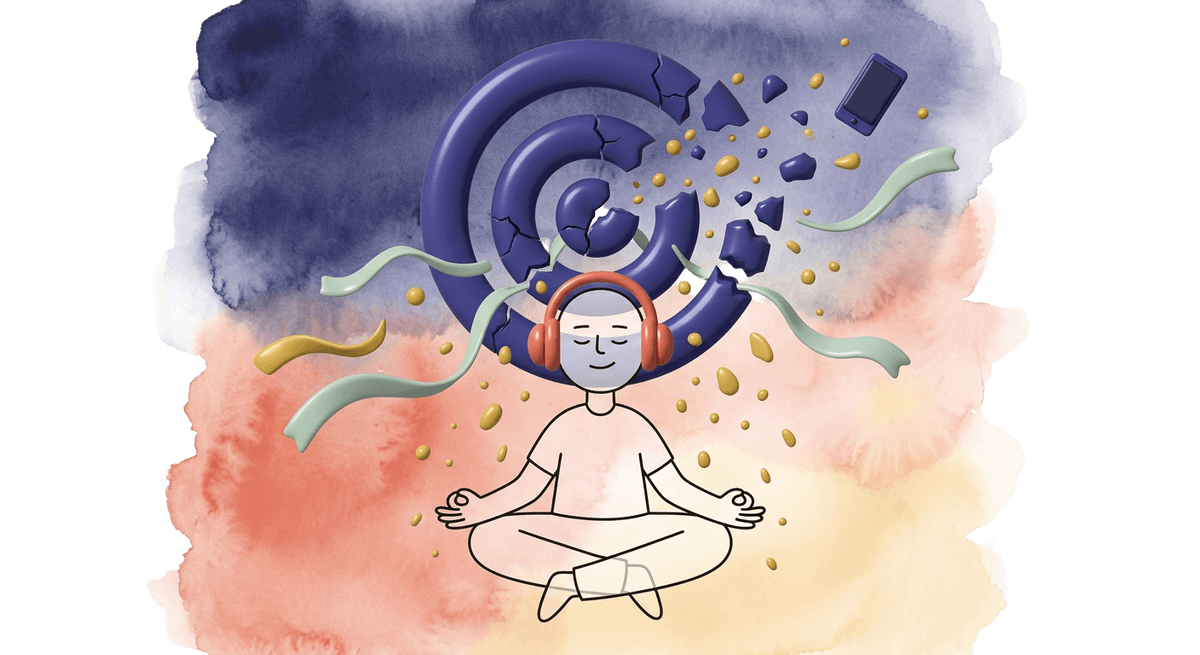
One notification.
Forty minutes gone.
The pull isn't a willpower problem. It's a pattern your brain needs to unlearn.
Find out what's actually driving the habit. Free, no credit card.
You already know the pattern
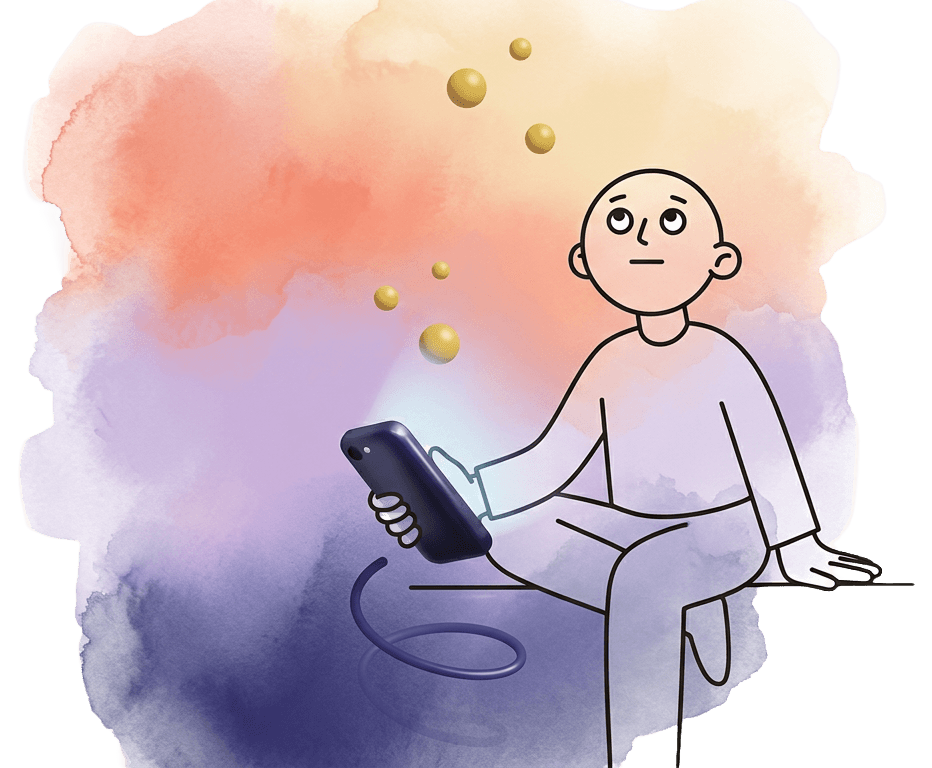
You're bored, stressed, or just don't know what to do with yourself. Your hand reaches for your phone before you've even decided to pick it up. You open an app, any app, and start scrolling. It doesn't even feel good. But you keep going.
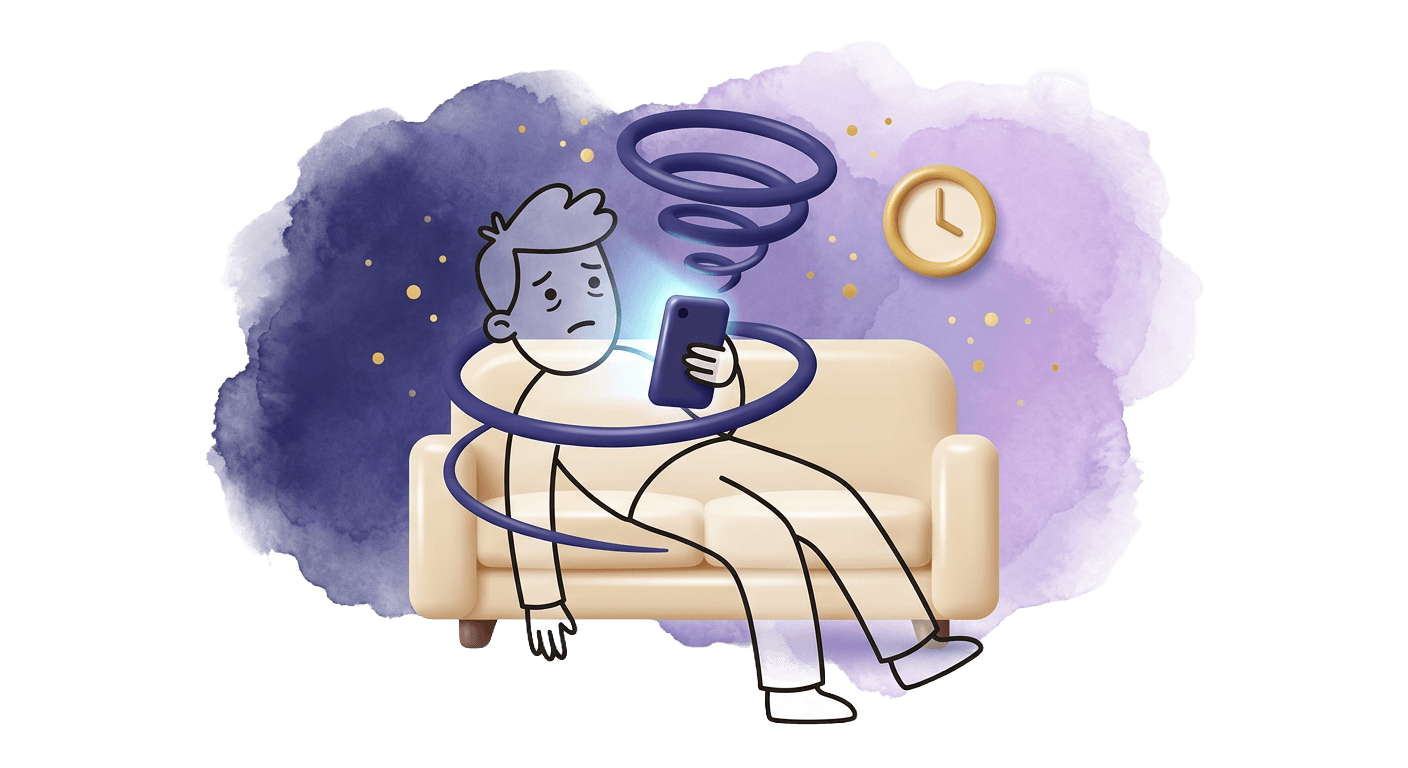
Eventually you surface. You feel worse than before. Scattered. Guilty. Annoyed at yourself. You tell yourself tomorrow will be different.
Tomorrow is not different.
A feeling you don’t want to feel
Boredom. Stress. Loneliness. Restlessness. That low-grade discomfort your brain wants to escape.
Your hand moves on autopilot
You don’t decide to pick up your phone. Your brain has already predicted that the screen will make the feeling go away. By the time you notice, you’re mid-scroll.
Quick numbness, then the crash
The first few seconds feel like relief. Then it turns hollow. Forty minutes later you feel more drained, more scattered, and further from the thing you actually wanted to do.
The guilt loop
Now you feel worse than when you started, plus the shame of doing it again. That discomfort becomes the next trigger. The cycle feeds itself.
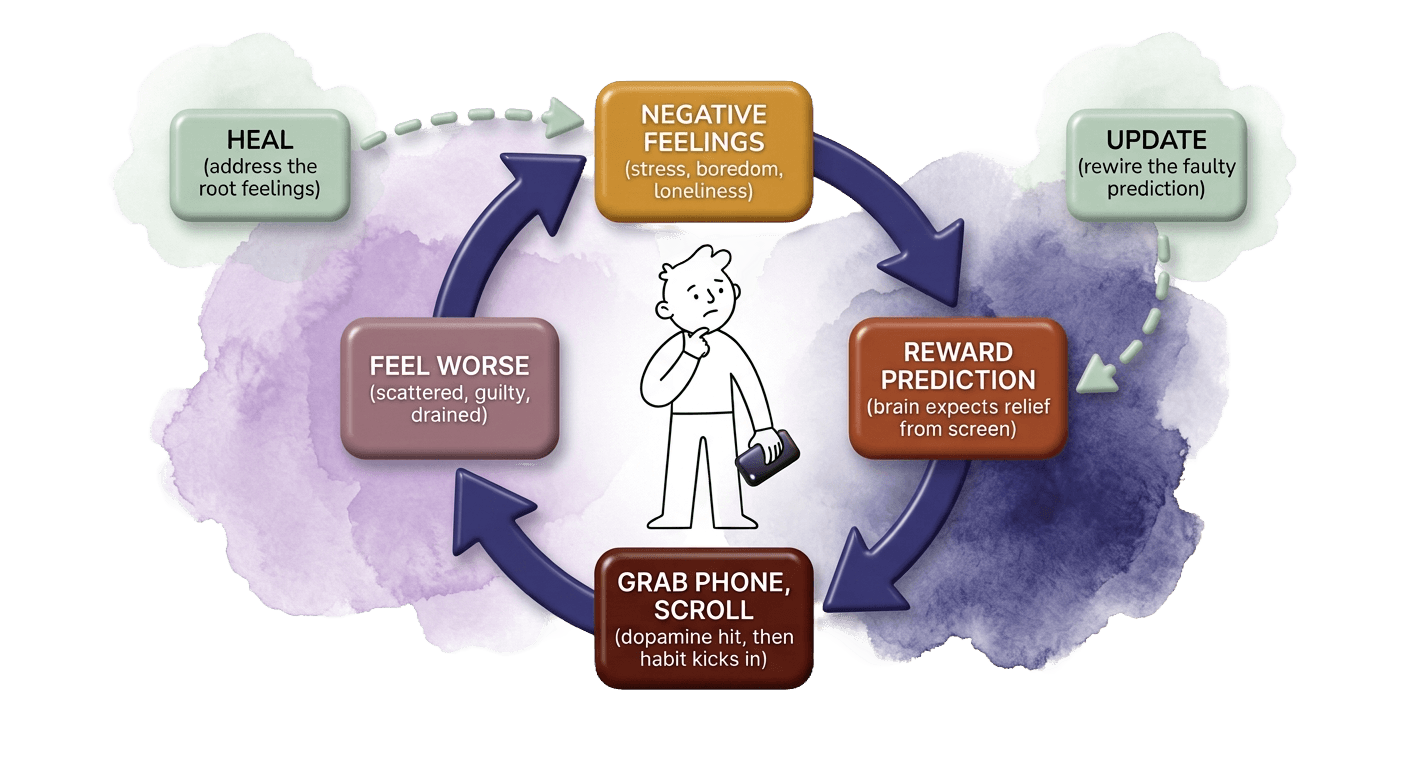
Two ways out. We work on both. Neither of them is willpower.
Why everything you've tried keeps failing
You're not bad at this. The tools were never built for the actual problem.
App blockers & screen time limits
They put a wall between you and the screen. But the urge behind the wall stays at full strength. You either override the timer or white-knuckle through it until you cave. The underlying pattern never changes.
Deleting apps & going cold turkey
Works for a few days. Maybe a week. Then stress spikes, boredom hits, and you reinstall everything in under two minutes. The brain’s prediction that “screens will make this feeling go away” is still fully intact.
Willpower, rules, and trying harder
Willpower is a resource that runs out. By the end of a long day, the urge wins because it’s running on a loop your conscious mind can’t override. Trying harder only works until you’re too tired to try.
All of these target the behavior: the scroll, the tap, the unlock. None of them touch the pattern underneath that makes your brain want to do it in the first place.
❌ Blockers, limits & willpower
- Targets: the phone
- Method: suppression and restriction
- The urge stays active underneath
- Stress builds until you cave
- Habit comes back when the barrier drops
✅ The Liftgaze approach
- Targets: the brain's learned prediction
- Method: guided attention + reward revaluation
- The urge itself weakens over time
- Change feels effortless, not forced
- Habit fades because your brain updated
It's not a willpower problem. It's a prediction problem.
Here's what's actually happening in your brain: at some point, through thousands of repetitions, your brain learned a simple prediction:
“Uncomfortable feeling → grab phone → feel better.”
That prediction now fires automatically, faster than conscious thought. It's why your hand moves before you decide. It's why you open Instagram without meaning to. It's why you tell yourself “just five minutes” and lose an hour.
This isn't a character flaw. It's a learned pattern. And the reason blockers and willpower don't work is that they try to stop the behavior without updating the prediction.
The prediction stays. The urge stays. You're just fighting it with a smaller and smaller battery.
What actually changes the prediction
Your brain can update this pattern, but only under specific conditions. It needs to:
- Feel the urge in real time, not think about it, feel it
- Notice the gap between what it expects (relief) and what actually happens (nothing good)
- Register that mismatch enough times that the old prediction loses its grip
Neuroscientists call this reward revaluation. The brain recalculates whether a behavior is actually worth doing. When the math changes, the urge changes. Not because you fought it, but because your brain stopped believing in it.
That's what Liftgaze is built to do.
How Liftgaze rewires the habit at its root
One guided audio session a day. 15–20 minutes. No blocking. No white-knuckling.
Phase 1 · Weeks 1–4
Break the autopilot
You learn to notice the urge as it fires, not after you’ve already been scrolling for twenty minutes. Guided sessions train your brain to feel the craving without obeying it, and to notice that the expected relief never actually arrives. Each time this happens, the prediction weakens. The autopilot starts to stall.
Phase 2 · Weeks 5–8
Heal what’s underneath
Most compulsive screen use covers something: stress you’re not processing, loneliness, a lack of direction, emotional discomfort you’ve been avoiding for years. This phase works on the root feelings so the trigger itself loses power, not just the response to it. When the wound heals, the need for the escape dissolves.
Phase 3 · After week 8
Lock it in
Stress spikes, bad weeks, life changes. These are the moments old patterns try to come back. Maintenance sessions and booster exercises keep the new wiring locked in so you don’t slide back.
“Wait, guided hypnosis? Isn't that…”
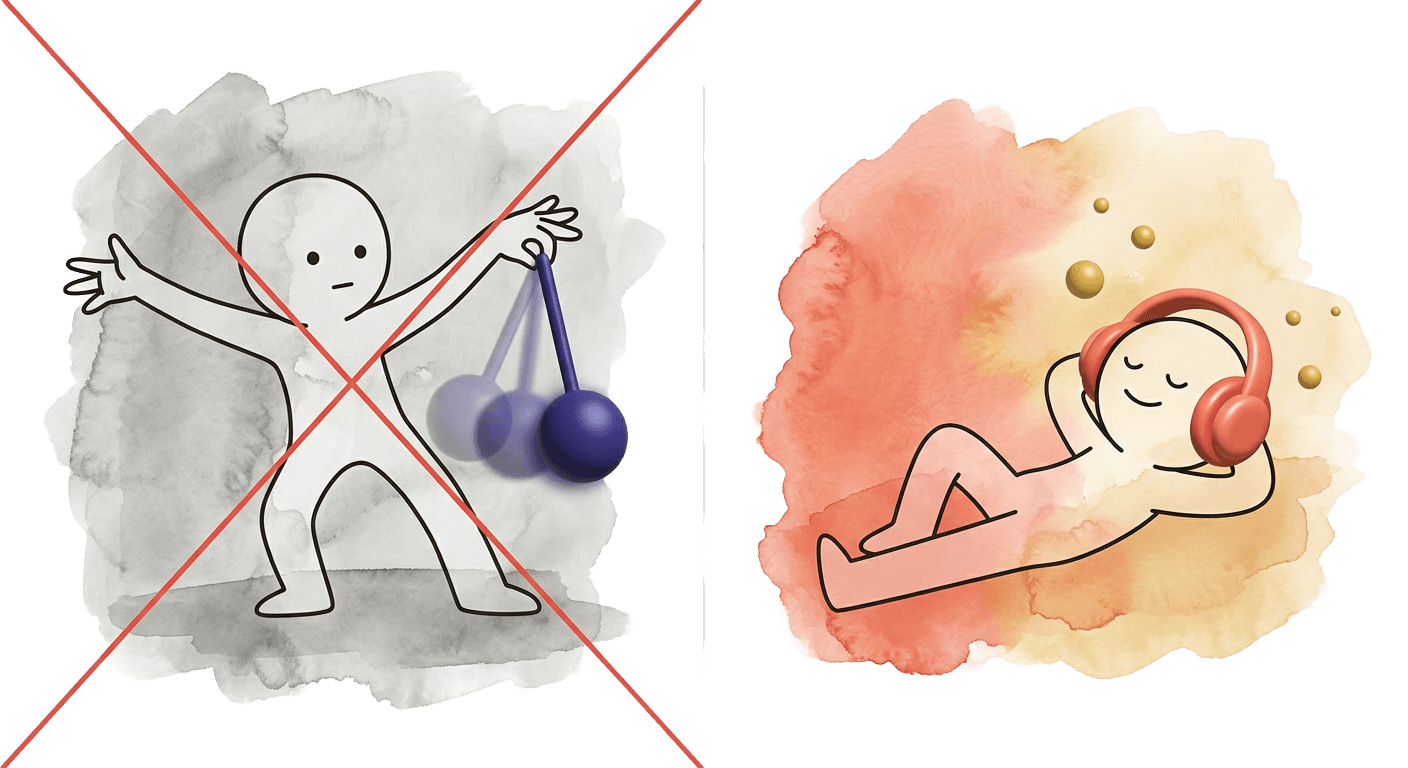
Forget everything you've seen on stage or in movies. No one takes control of your mind. You stay aware the whole time.
Guided hypnosis is focused attention, the same kind of absorption you feel when you're deep in a book or a film and forget where you are. A voice guides you to direct that focus on the exact internal experience that needs to update: the urge, the feeling underneath, the prediction your brain is running.
It works at the level where the pattern was formed, below self-talk, below conscious thought. That's why it produces changes that feel effortless rather than forced.
Think of it as a workout for the part of your brain that decides what to reach for when you're uncomfortable.
What a session sounds like
Noticing the Urge
Week 2 · Session 3
You listen in bed, on the couch, or wherever you can close your eyes for 15–20 minutes. No journaling. No worksheets. Just listen.
Backed by hard data
These numbers come from randomized controlled trials, not testimonials or blog posts.
0.0×
more effective than the gold standard
Reward re-evaluation based training vs. the leading behavioral program for breaking compulsive habits.
Brewer et al., Drug and Alcohol Dependence (2011)
0.0×
greater reduction in screen time than monitoring alone
Targeted behavioral intervention vs. just tracking your usage.
Olson et al., International Journal of Mental Health and Addiction (2022)
0.0×
bigger drop in compulsive use
Same trial, measuring the automatic pull toward screens: the “I can’t stop checking” feeling.
Olson et al. (2022)
Built on research in reward revaluation (Judson Brewer), memory reconsolidation (Bruce Ecker), and predictive processing theory.
What changes when the pattern breaks

You catch the urge before it wins
That split-second gap between “I feel restless” and “I’m on my phone” starts getting wider. You start choosing instead of reacting.
You can actually focus
Deep work, reading, conversations. You finish what you start instead of bouncing between tabs and apps every few minutes.
Being away from your phone feels normal
That low-level anxiety of not checking, the phantom buzz, the itch to look. It all fades. Boredom becomes tolerable again.

Your evenings come back
The late-night scroll hole stops pulling you in. You wind down, you sleep, you wake up without the 2am screen hangover.

You’re actually present with people
Conversations feel different when your attention isn’t split. You notice more. People notice too.
Screens become tools again
You use your phone for what you need and put it down. Technology goes back to serving you instead of running you.
Everything in the program
A personalized assessment
Maps your specific triggers, habits, and what’s underneath them so sessions are targeted to your pattern, not generic.
A new guided session every day for 8 weeks
Each session builds on the last. 15–20 minutes, audio-only. Listen before bed or whenever you have a quiet window.
Daily check-ins that show your progress
Short prompts that help you notice shifts as they happen so you can see the pattern weakening in real time.
Maintenance sessions after the core program
Booster sessions for high-stress periods, plus ongoing access to keep the changes locked in.
Free · 3 minutes · No credit card
See your pattern
in 3 minutes
The quiz maps what's actually driving your screen habit so you can stop guessing and start fixing.
Your main trigger
Boredom, stress, loneliness, avoidance, or something else
Your habit pattern
What you reach for, when, and how the loop runs
What it’s costing you
The specific way the habit is hitting your focus, sleep, mood, or relationships
Your matched session path
A personalized starting point based on your answers, not a one-size-fits-all program
No account needed to start
Common questions
The scroll doesn't stop on its own. But the pattern driving it can.
Take the quiz to find out what's actually driving your screen habit. Then start rewiring it.
Free to start · No credit card · Your first session is available immediately after choosing a plan